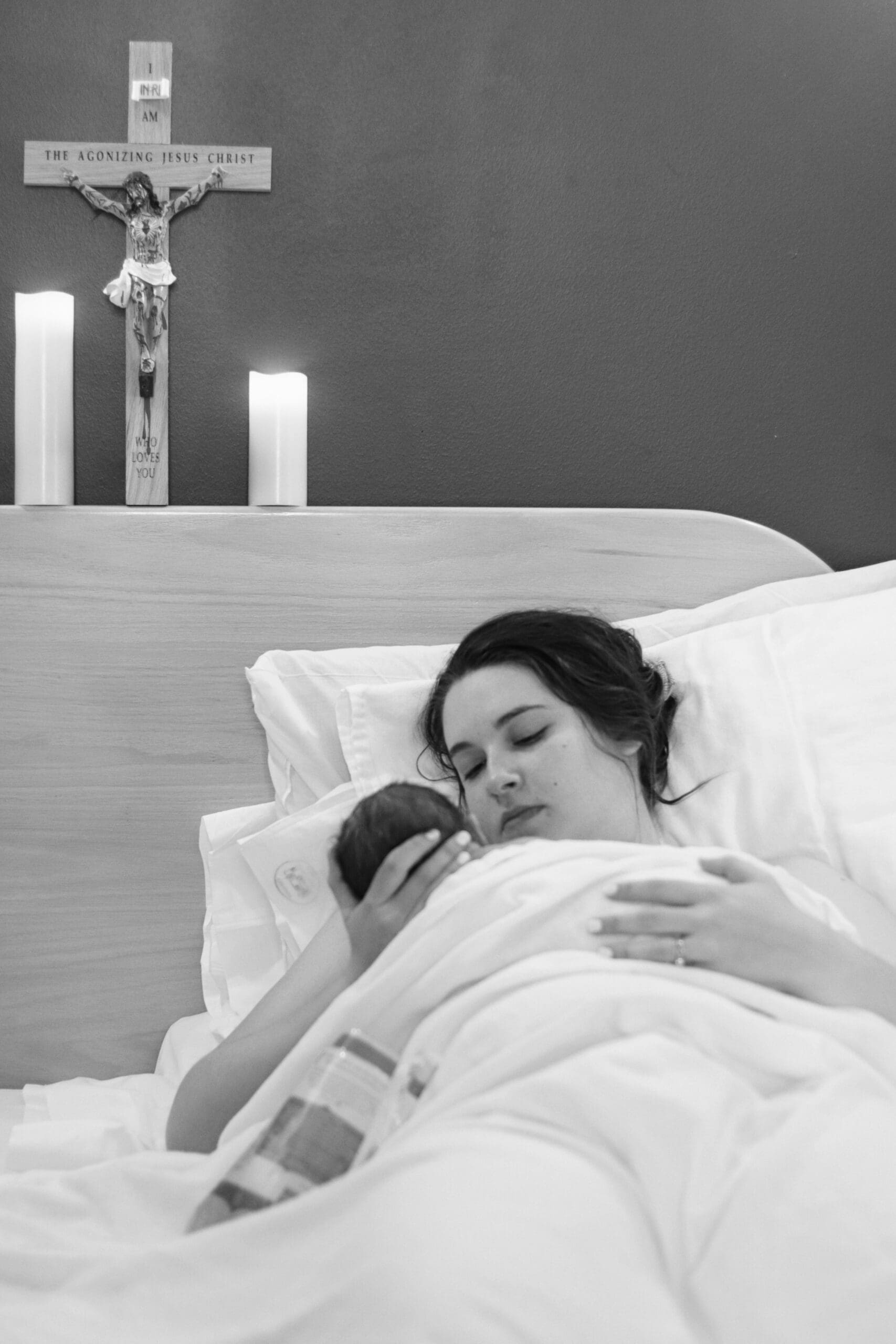

If you’re researching how to prevent a C-section, you’re not alone. Many expectant mamas hope for a natural vaginal birth but worry about unnecessary interventions leading to surgery. While cesareans are life-saving and absolutely necessary in some cases, many healthy, low-risk births end in surgery due to common practices in today’s medicalized birth system.
The truth is, while you can’t control your birth outcome entirely, there are practical, evidence-based ways to lower your risk and have a healthy, natural birth. Education, preparation, and informed decision-are so important in supporting a natural labor and reducing the likelihood of an unnecessary C-section.
Below are six proven strategies that can help you understand how to prevent a C-section and advocate for a more physiological birth experience.
Why Are C-Section Rates So High?
In the United States as of 2023, about one in three births ends in a C-section, far exceeding the World Health Organization’s recommended rate of 10-15% for optimal maternal and infant outcomes.
This suggests that many C-sections are not medically necessary, but instead result from routine interventions, time constraints, and a lack of support in the medical system for natural labor. Understanding how to prevent a C-section starts with recognizing the systems and practices that increase the risk.
1. Hire a Doula to Help Prevent a C-Section
One of the most effective, research-backed answers to how to prevent a C-section is hiring a birth doula.
A doula provides you with continuous emotional, physical, and even spiritual support throughout labor. Studies consistently show that doula-supported births are associated with:
- Lower epidural rates
- Shorter labors
- Higher birth satisfaction
- Significantly fewer C-sections
In fact, women who give birth with a doula are up to 68% less likely to have an unnecessary C-section. Continuous labor support helps you stay calm, confident, and empowered especially during moments when interventions may be suggested by your birth provider.
2. Choose a Birth Provider Who Supports Natural Birth
Every provider practices differently. Asking the right questions during prenatal care can dramatically impact your birth outcome. Consider asking:
- What is your C-section rate?
- How often do you induce labor?
- How do you handle long labors or stalled dilation?
- How do you support unmedicated or low-intervention births?
Fear-based language, rigid policies, or dismissing your preferences are huge red flags. You always have the right to change providers, even if you’re late in your pregnancy.
3. Avoid the Cascade of Interventions
A major contributor to unnecessary C-sections is the cascade of interventions, which refers to when one intervention leads to another, ultimately ending in surgery.
For example:
- Pitocin is used to speed up labor
- Stronger contractions are less manageable and lead to an epidural you didn’t really want
- The epidural slows labor, requiring more Pitocin to speed contractions up again
- Baby becomes stressed due to the increased Pitocin, prompting a C-section
Understanding how to prevent a C-section means recognizing when interventions are truly necessary versus routine. Learning about common birth interventions allows you to participate actively in decision-making rather than feeling rushed or pressured.
4. Let Labor Begin on Its Own When Possible
Elective inductions increase the risk of additional interventions and C-sections, especially for first-time moms.
A due date is not a deadline or expiration date! It’s an estimate. Allowing labor to begin spontaneously, when medically safe, supports the body’s natural hormonal flow and often leads to more effective contractions and smoother labor progression.
Waiting for labor to start on its own is one of the most impactful ways to support a natural birth and reduce the risk of a C-section.
5. Stay Home During Early Labor
Another key strategy for how to prevent a C-section is waiting until later in labor to get to the hospital.
Arriving during early labor increases the likelihood of being offered interventions to “speed things up.” Laboring at home and taking that time to rest, eat, hydrate, and relax allows your body to progress naturally before entering a clinical environment.
A good rule of thumb is to wait until contractions follow the 4-1-1 or 5-1-1 pattern before heading to the hospital.
6. Stay Mobile During Labor and Pushing
Movement is essential for labor progress and fetal positioning.
Walking, swaying, squatting, using a birth ball, and changing positions help:
- Encourage baby into an optimal position
- Use gravity effectively
- Reduce labor stalls
- Lower the chance of a C-section
This is also important during pushing. Upright or side-lying positions actually allow the pelvis to move freely and often make pushing more effective than lying flat on your back.
Final Thoughts on How to Prevent a C-Section
While not every C-section can or should be avoided, many unnecessary surgeries can be prevented with the right support, education, and preparation.
If you’re looking for strategies to prevent a C-section, focus on:
- Building a supportive birth team
- Choosing an aligned provider
- Trusting your body’s natural process
- Staying informed and empowered
Birth is a normal, physiological process, and God designed your body to give birth!
For even more guidance on preparing for a confident, natural birth, explore the full Holy Confident Birth Course. I hope to see you inside!